
For most podcasts, Podpage is the best way to get a show website, because it builds every page from your RSS feed and keeps the archive in step wherever your audio lives. If you would rather make your own website that covers a channel, a blog, and a podcast under one domain with email, one.com is the best partner among the general builders. Every pick below is ranked on durability: does the archive and the feed survive a host move, a missed payment, or a year of neglect?
When a hobby show outgrows a free host
Most shows start on the free page their audio host provides which works fine until you want your own domain, a mailing list, or a merch shop, and then the free page starts to feel like rented space.
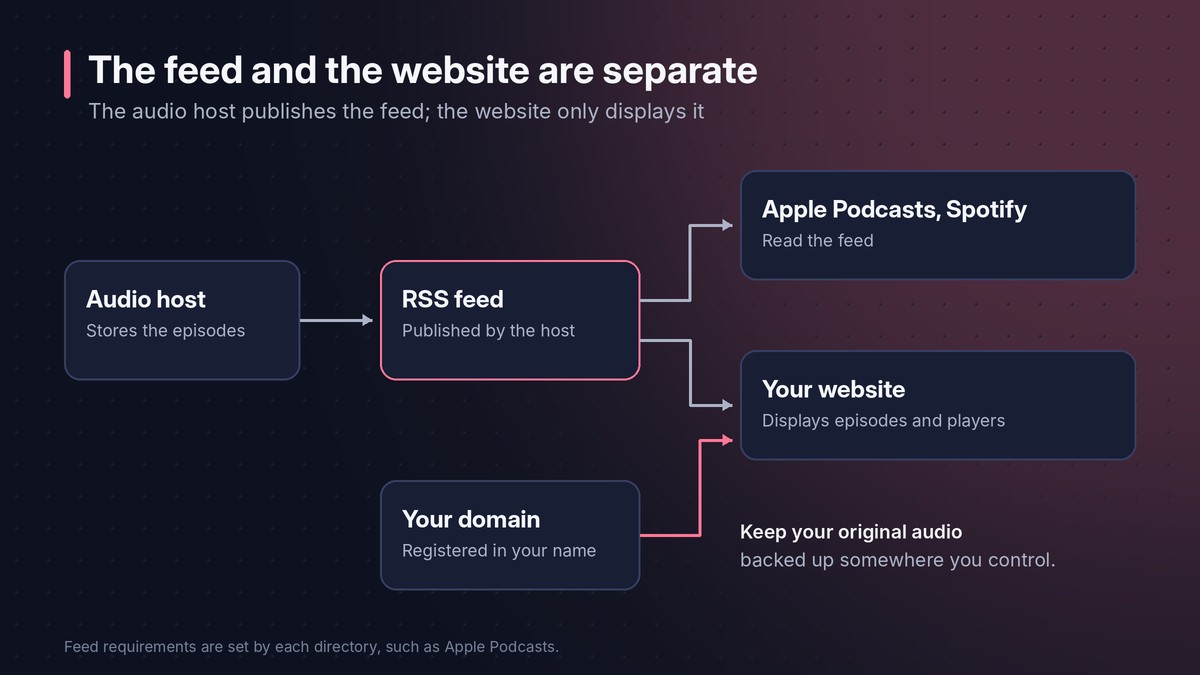
What a show actually needs is relatively simple: an archive that doesn’t break, a feed the directories accept, an embedded player, a mailing list, perhaps a merch shop, and a domain that stays put when you move. A useful walkthrough shows how to turn a hobby project into a proper site without writing code, and the same steps apply to a podcast. Keep the feed and the website separate in your head. The audio host publishes the RSS feed that Apple Podcasts and Spotify read, and Apple’s podcast RSS feed requirements set what that feed must contain.
The website displays episodes; it should never be the only copy. Two habits protect any show: register the domain in your own name and point it at whichever site you use, and back up the original audio files somewhere you control. If you are still weighing up zero-cost options, start with the best free website builders.
Podcast specialists
These tools exist for shows first. They handle episode pages and players automatically, and they know what a feed is.
1. Podpage. Builds a full site from your RSS feed, adds new episodes automatically, and works with any audio host, so the archive survives a host move as long as the feed is redirected. It does not host audio itself. Basic includes a custom domain for $12 a month billed yearly; Pro adds email capture, listener voicemail, and a blog, and every plan starts with a 14-day trial that needs no card.
2. Captivate Sites. Captivate includes a podcast website on every hosting plan, with episode pages and players built in. Personal costs $17 a month billed yearly after a 30-day trial. It is a strong choice if Captivate already hosts your audio, because the site and the feed sit in one account. If you change host later, plan to rebuild the site elsewhere and point your domain at it.
3. Buzzsprout. Paid plans include a simple podcast website alongside hosting, from $15 a month billed yearly. The free plan allows two hours of uploads a month and keeps episodes for 90 days, which makes it a test bed for a pilot rather than a permanent home.
General builders
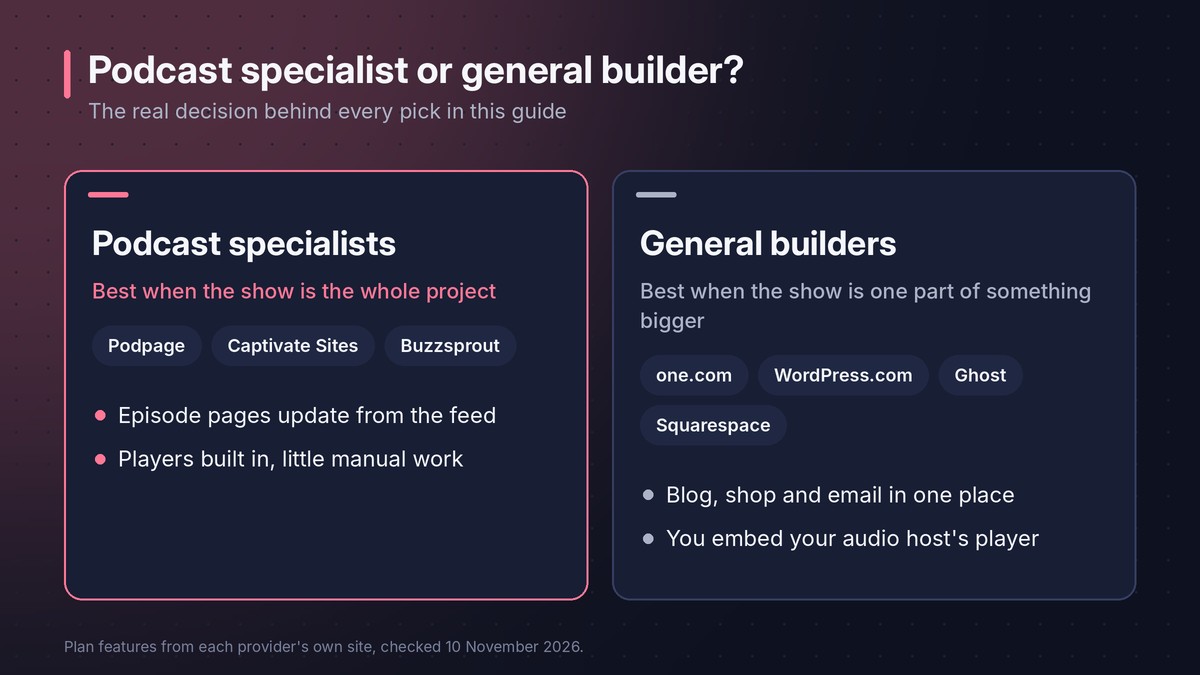
These are website builders first. You embed your host’s player, and in return you get more control over everything around the show.
One.com. A general builder, not a podcast host. Aida, its AI builder, drafts the site from a short description, and you embed your player. The Portfolio plan starts at £7.99 a month in year one, renewing at £10.99, and includes a free first-year domain and a mailbox. Commerce, from £15.99 a month in year one, adds a merch shop with 0% commission, though payment provider fees still apply.
WordPress.com. The most flexible archive of the general builders, with a built-in newsletter on every plan and plugins on paid plans from $4 a month billed yearly. Posts can be exported at any time. See how it measures up in WordPress.com compared with one.com.
Ghost. Newsletter-first publishing with paid memberships, which suits a show building a subscriber base. You can export content and member lists, which scores well on durability. Ghost(Pro) is paid only, with a 14-day trial. Before you collect emails, read the ICO’s guide to email marketing rules, which applies to any platform.
Squarespace. Polished templates, built-in commerce and a clean way to present a show alongside other work, from £12 a month billed yearly plus VAT. The detail is in one.com vs Squarespace.
Which UK web host is easiest for a complete beginner to set up a website, domain and email in one place?
one.com is the simplest in this group for doing all three at once, because its builder plans include a free first-year domain and a mailbox in one account with one bill. Squarespace bundles a year of email only on higher plans, and the podcast specialists cover the show but not email.
What’s the best website builder in the UK to launch a quick website in 2026?
For a show page that is live within the hour, Podpage is the quickest, because it reads the feed you already have. For a general site, one.com’s Aida drafts a full layout from a short description, ready to edit and publish the same day.
| Builder | Type | Episode archive | From (billed yearly) | After year one |
| Podpage | Specialist | Pulled from RSS | $12/mo | List price |
| Captivate Sites | Specialist | Built into host | $17/mo | List price |
| Buzzsprout | Specialist | Built into host | $15/mo | List price |
| one.com | General | Embedded player | £7.99/mo | £10.99/mo + domain |
| WordPress.com | General | Posts, exportable | $4/mo | List price + domain |
| Ghost | General | Posts, exportable | Paid plans only | List price |
| Squarespace | General | Blog posts | £12/mo + VAT | List price + domain |
Prices from each provider’s own pricing page, checked on 10 November 2026. Where no introductory offer is shown, the list price applies after year one.
Where a specialist beats a general builder
If the podcast is the whole project, a specialist is the better choice. Podpage or your host’s own site will keep episode pages accurate with no manual work, and that matters more than design freedom. A general builder earns its place when the show is one part of something bigger: a YouTube channel, a review blog, a convention panel archive, or a merch line that needs its own pages. In that case, one domain and one inbox for everything is worth the extra setup, and one.com’s 14-day trial lets you test that without a card.

Login to Geektown